
-
Spanish M09 Desert Bonnie Hat
Regular price €20,00 EURRegular price -
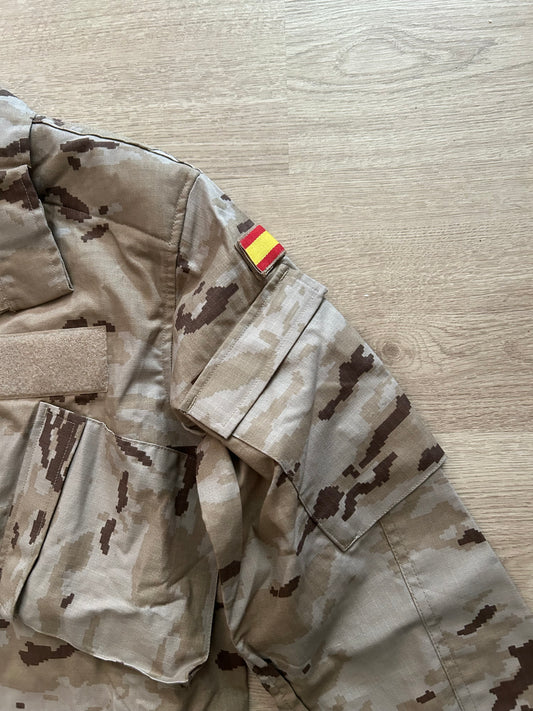
Spanish M09 Desert Shirt
Regular price From €30,00 EURRegular price -

 Sold out
Spanish M09 UBAC
Regular price €50,00 EURRegular price -
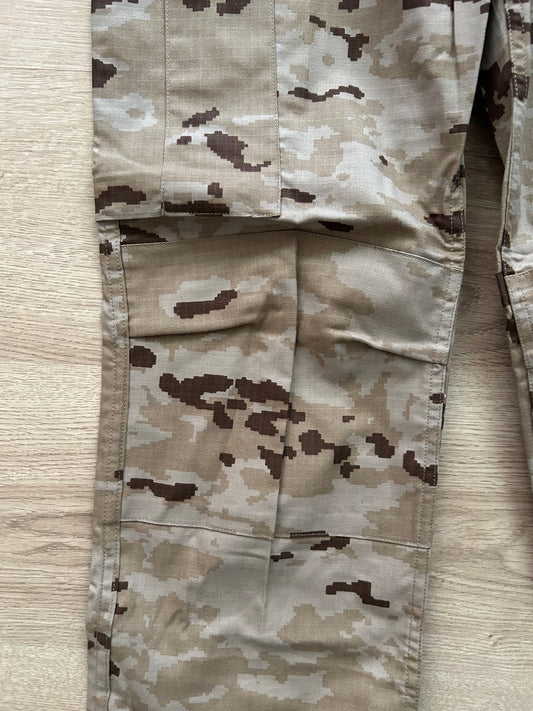
Spanish M09 Desert Pants
Regular price €45,00 EURRegular price -
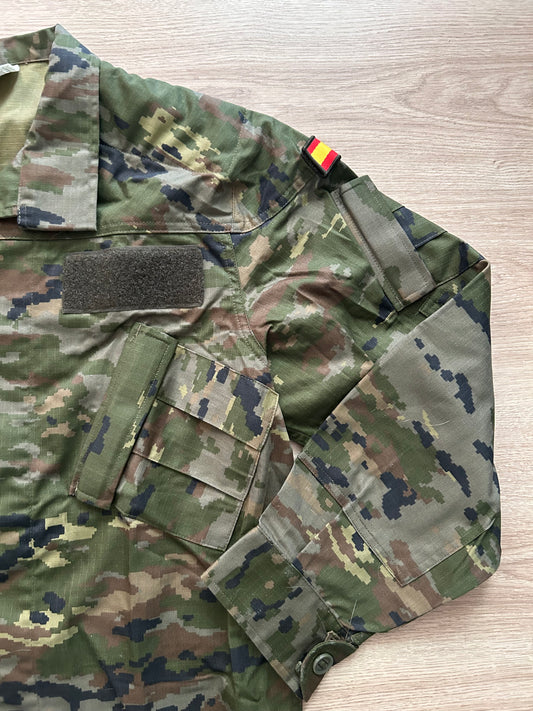
Spanish M09 Boscoso Shirt
Regular price From €25,00 EURRegular price -

 Sold out
Spanish Marines Pants
Regular price €50,00 EURRegular price -

 Sold out
Rare Spanish Rocoso Shirt
Regular price €90,00 EURRegular price -
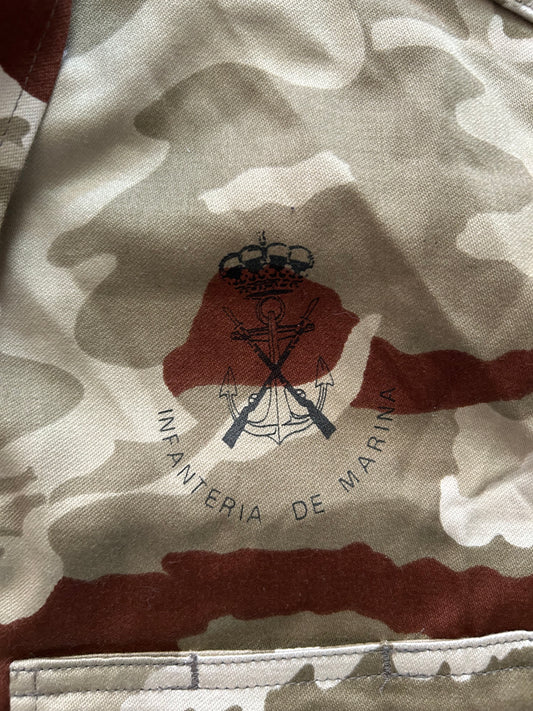
Spanish Marines Jacket
Regular price €55,00 EURRegular price







Spanish Camo Patterns and Surplus
From the 1950s onward, Spain developed some amazing and distinctive camouflage patterns built around its airborne units, special forces and the Legion. Instead of constantly changing designs, the Spanish Army refined a handful of amoeba, rocoso and boscoso patterns and later replaced them with a digital pixelado family.
Early Amoeba Patterns and Paratrooper Smocks
Spain's first true camouflage uniforms appeared in the late 1950s and early 1960s for elite units rather than the whole Army. Paratroopers and special operations companies received patterned smocks, trousers and ponchos with large rounded amoeba shapes in contrasting colors on a light base. Collectors usually call these green amoeba and brown amoeba, depending on which color dominates. The more arid version was called rocoso, while the boscoso version featured darker colors and was clearly intended for woodland use.
Unlike later general issue uniforms, these amoeba sets were produced in small batches and often tailored for specific units such as the parachute brigade BRIPAC and commando companies.
M59 Rocoso – Brown Amoeba for Harsh Terrain
Within this early family, the pattern now known as M59 Rocoso represented a brown dominant amoeba intended for rocky, arid terrain. Period items like field shirts and caps in rocoso show large rounded shapes in various browns and dark tones on a lighter base, giving a more earth and rock oriented appearance than the greener boscoso variant. Surviving examples link rocoso strongly to paratroopers, COE special operations units and Legion elements.
Because it was never adopted as a mass uniform for the entire Army, original rocoso garments are scarce. Many pieces were used heavily in training and field exercises and discarded instead of entering surplus channels.
M60 and M69 Boscoso – Green Amoeba Woodland Patterns
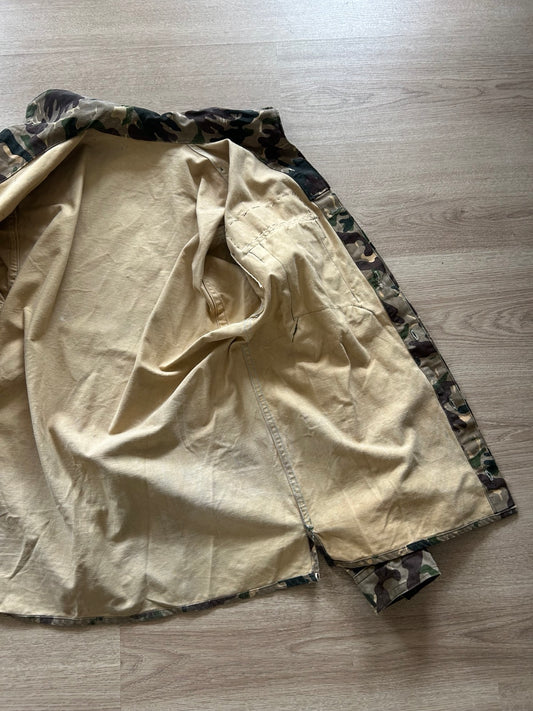
The green dominant successor to rocoso became known as M60 Boscoso, literally woodland. This pattern retained the amoeba style but used more green and black over a light green background, tuned for Mediterranean woodland and scrub. It is generally considered the first fully developed Spanish Army woodland camouflage and equipped paratroopers, Legion units and the Infantería de Marina in various cuts throughout the 1960s and 1970s.
Later, the M69 series refined both the cut and the print. M69 boscoso and rocoso garments included field shirts, trousers and caps, with minor layout or shade differences between contracts. These M69 variants became the standard camouflage clothing for elite units across the 1960s to 1980s, while most of the Army still wore plain green or non camouflaged uniforms.
Legion, COE and BOEL Use of Rocoso and Boscoso
Throughout the Cold War, Spanish special forces and the Legion gave these patterns most of their operational visibility. COE (Compañías de Operaciones Especiales) and later BOEL (Bandera de Operaciones Especiales de la Legión) combined the traditional Legion identity with green berets and specialized camo uniforms. These units often trained in mountainous and rugged terrain wearing amoeba derived rocoso and boscoso uniforms, caps and field gear.
Six Colour Desert and Early Arid Uniforms
By the early 2000s, Spain introduced a dedicated desert uniform for deployments abroad. In 2003 a desert camouflage closely based on the US six colour DBDU chocolate chip pattern entered service. This design provided much better concealment in arid environments than earlier amoeba and boscoso patterns but came late in the life of the pre digital uniform family and was soon superseded.
M09 Pixelado Boscoso and Árido – Digital Variants
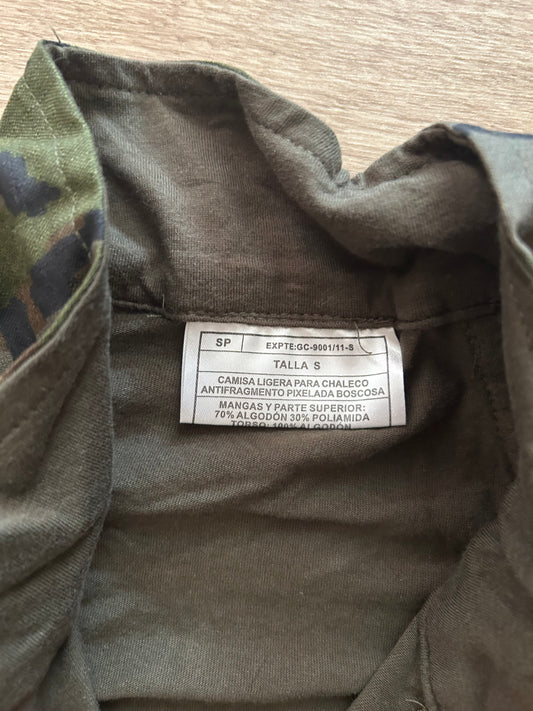
In December 2009, the Army unveiled two new digital patterns intended to replace the older leaf and amoeba styles. The M09 Ejército de Camuflaje Pixelado came in boscoso (woodland) and árido (desert) variants. The boscoso version incorporated small layered patches of black, olive, reddish brown and khaki on a moss green base, influenced by modern multi environment designs.
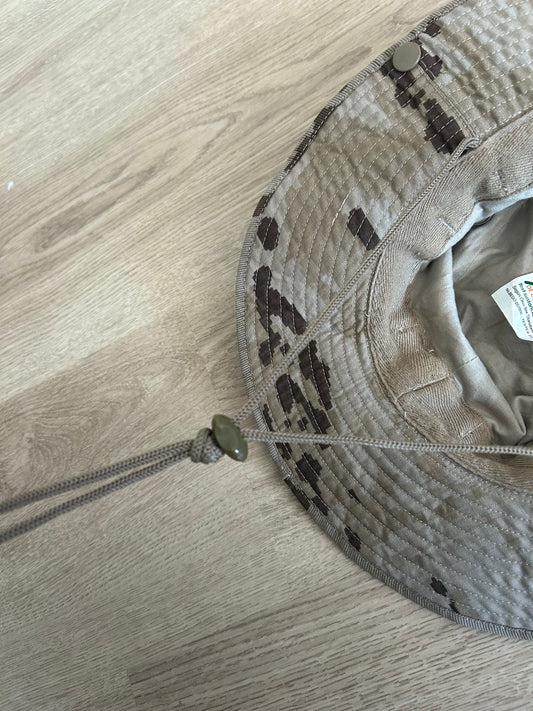
The árido variant used a lighter tan and earth palette with the same fractal pixel structure. Both patterns formed complete uniform systems including jackets, trousers, headgear and specialist cuts. The Legion, BRIPAC and special forces units adopted pixelado early, with many modern training photos showing BOEL operators in M09 boscoso digital uniforms.
Spanish Navy Marines Desert Camouflage
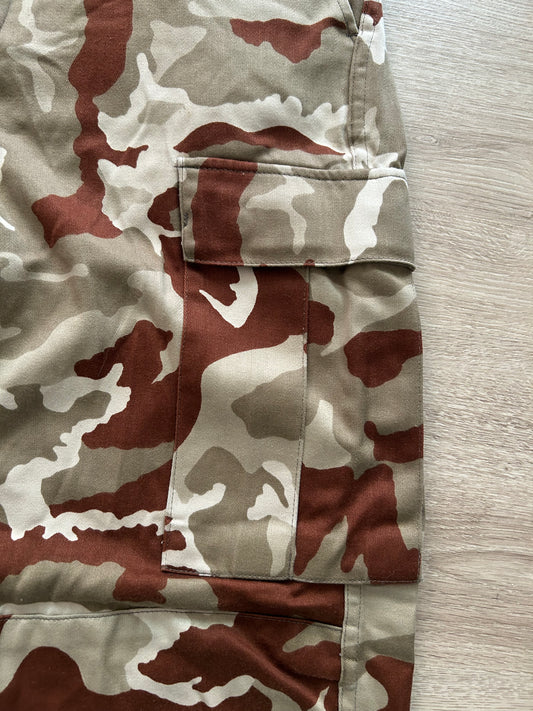
In 2003 the Infantería de Marina introduced its own dedicated desert camouflage pattern, separate from the Army's six colour design. This naval desert pattern uses four tones arranged in rounded organic shapes that blend well in arid coastal regions and rocky desert terrain. It offered a modernized look and quickly became associated with Spain's amphibious and expeditionary forces. As this is not a widely issued uniform, these items are hard to get, but I currently have one Spanish Marines uniform for sale.
The pattern proved effective and practical, leading to its adoption by Spanish Air Force paratroopers (EZPAC) for deployments in similarly harsh environments. Although it was never produced in the same volumes as Army pixelado uniforms, it was widely used on field shirts, trousers, boonie hats and specialist cuts tailored for marine infantry tasks.